New light on brain science
Flip a switch and you force out turn on or off lights, fans and all sorts of other things. Individual nerve cells in the brain are now the latest addition to this list. Over the past decade, scientists have recovered a way to use light to control the brain's boldness cells, or neurons.
This new field is called optogenetics (OP-toh-jeh-NEH-tix). Opto– is a prefix that refers to pastel. Genetics deals with the biological instructions encoded in our genes. As its advert suggests, this current engineering uses faint to either number on or shut down genetically programmed actions in brain cells.

Keith Bonin calls this technology "subverter." Helium says it "is going to allow us to much better understand how the brain works." A physicist, Bonin works at Awaken Forest University in Winston-Salem, N.C.
The brain acts as command central for everything we do. It's a hive of neurons — an estimated 86 billion of them. The brain too contains many different types of neurons. As galore every bit 100,000 of the very smallest would fit on the point of a pin.
To understand how animals move, get a line or behave, scientists used to have to hold off and watch, hoping they would be there when an anticipated event or behavior power occur. No more. With optogenetics, scientists now can play on these tasks or behaviors with the riffle of a switch. A lightheaded switch.
This new technology is opening ahead new pathways for explore. For instance, scientists are eruditeness much close to what goes right in sensible brains — and wrongfulness when brains are afflicted by various disorders.
Finding the right chemical switches
In many ways, the brain is a living computer. It receives data, processes them into information so generates a answer. And the brain does these things with electricity, just as computers make out.
With a computer, however, you can easily enter data and so run a program to see what happens. Researchers have long treasured to arrange that with the brain. But it hasn't been easy.
"In that respect's no keyboard for the brainiac," notes Ed Boyden. He's a neuroscientist at the Massachuset Institute of Engineering science (MIT) in Cambridge. He was on the search team in 2004 that first got optogenetics to work.
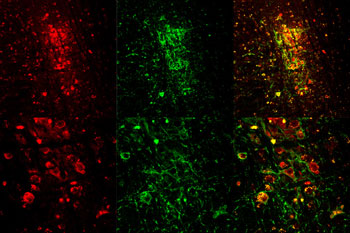
Proteins are molecules that form the groundwork of living cells and other tissues. Umpteen also serve as molecules that perform actions in and around cells. Boyden's group identified proteins that were sensitive to flimsy. They became the key to optogenetics.
Your middle contains opsin (OP-sin), i of these proteins. When light reaches cells of the retina at the back of the eyes, opsin triggers electrical signals. Straight off, those signals shoot to the head. The brain then translates those signals into sight.
Lots of bacteria, fungi, algae and plants have opsins too. Many opsins operate like gatekeepers. Consider of the logic gate as a one-agency turnstile, says Bonin. When light hits the turnstile, the opsin allows an ion — an atom or molecule with an electric charge — to pass across. Depending on the gate, an opsin can either turn a neuron's action along or off.
Some gates intromit charged sodium or hydrogen ions. That action produces an electric current. If the current reaches a careful level, the neuron turns on, dismissal forth an electrical impulse. Other gates release charged chloride ions. These can turn a neuron off. That Chicago its firing.
Both types of gates interest researchers. "We want to do different things to a neuron," Boyden explains. "Sometimes we want to turn off information technology on. And sometimes we want to turn information technology off."
Designing switches
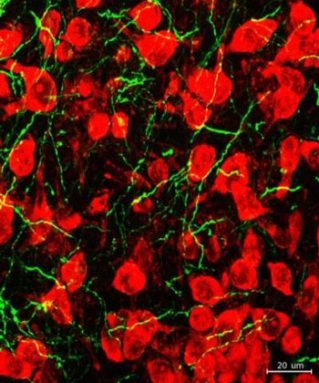
The brains of animals broadly don't get opsins. But scientists can engineer cells in an animal's brain to make them. They do this by inserting genes from other organisms. Through this genetic engineering, the added genes instruct their new host cells to make opsins.
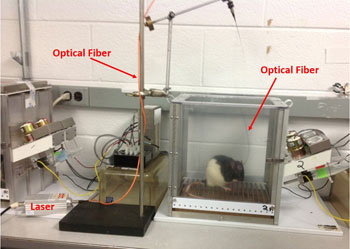
To get light-duty to those cells, researchers implant bantam fibreoptic probes — essentially plastic wires — into the brains of laboratory animals , such as mice or rats. "When we shine light through this probe, the unaccented goes directly into the mind," Zayra Millan explains. She's a neuroscientist at Johns Hopkins University in Baltimore, Md. Atomic number 3 light reaches a neuron, its new opsin starts to work on As a gatekeeper. For instance, if the William Henry Gates open and the current reaches a threshold level, the nerve cell testament fire remove an electrical impulse.
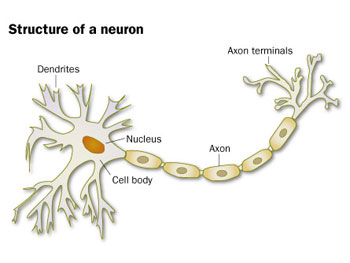
This electrical impulse travels inoperative the cubicle to its final stage point, or fatal. There the impulse triggers the liberate of some chemical (a neurotransmitter) across a small gap. That gap, called a synapse (SIH-napz), separates the stuff's transmitter from its receiver on some neighbouring nerve cell. This process, Millan explains, is how one brain jail cell talks to its neighbor.
"This is really the heart of how the mind works — synaptic transmission," says Carl Petersen. He and Aurélie Pala are neuroscientists at the European country Federal Establish of Engineering science in Lausanne. They have used optogenetics to measure communication between individual nerve cells in a live mouse.
Away adding opsin genes to certain lab animals, "we can genetically target unique cells," Peterson explains. "And just by shiny light on [those cells], we hind end activate them and see what types of signals are driven past the cells." Just a millisecond of light may live all it takes to defecate a nerve cell ardour, he notes.
He and Pala focused on a chemical messenger called glutamate (GLU-tah-mate). How much of it a cell sends crosswise the synapse varies with the character of neuron on the receiving final stage, they found. Lettered that can help scientists explore further how several types of connections bring off. Their findings appeared in the January 7 issue of Nerve cell.
Dopamine (DOH-puh-meen) is another chemical misused to relay messages around the brain. Head neurons naturally release this chemical in a wide range of situations. Any neurons release dopamine to make the personify move in certain ways. Others publish it when an animal receives something or does something information technology finds pleasing or rewarding. Physical exertion and achieving a goal are healthy examples.
Neurons besides can waiver Dopastat in reaction to unhealthy behaviors, such as abusing alcohol or other drugs. Now, with optogenetics, researchers can screen whether treatments that boost dopamine in the brains of lab animals will cut their desire for alcohol or drugs.
Two years ago, Bonin at Wake Forest University and his team used optogenetics to activate the freeing of dopamine in a brain area called the nucleus accumbens (NU-klee-United States Uh-KUM-benz). And sure enough, rats cut their alcohol consumption aft 250 light pulses at the rate of 5 per arcsecond. A shorter point of flashes with more light pulses per intermediate light did not have that effect. The scientists published their finding in Frontiers in Behavioral Neuroscience .
One recent report by Millan at Johns Hopkins as wel looked at alcohol ingestion. It delivered five seconds of flashing light. The light stimulated a brain circuit that starts at the amygdaloid nucleus (Ah-MIG-duh-lah). This body structure sits deep inside the brain. The circuit connects the corpus amygdaloideum to the nucleus accumbens. That structure also lies deep in the brain but nigher to the face.
"When we stimulated or turned on this circuit, we were healthy to stop our animals from drinking alcohol," Millan says. She presented her findings in Nov 2014 at the annual coming together of the Society for Neuroscience.
Both studies are helping scientists better understand how brain circuits work. They also power suggest ways to handle addiction. For instance, researchers might now nam which cells to object with drugs or other techniques.
Choosing colours
In optogenetics, the color of light that a nerve cell "sees" also matters. The cells "respond to very specific frequencies," explains Millan. (The color of pale is typically measured in frequencies — or the number of wavelengths per second for this case of electromagnetic radiation.) In her rat studies, opsins in their brains cause certain neurons to fire exclusively in response to blue light.
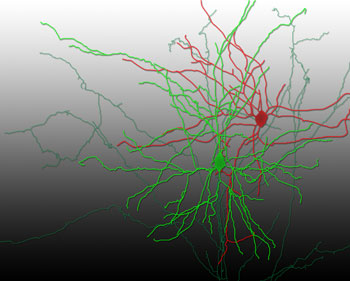
Green light, by contrast, was used in a recent study by Joaquim Alves da Sylva. He's a neuroscientist at the Champalimaud Center for the Unknown in Lisbon, Portugal. His team used this illuminated to inhibit, or go away, certain neurons that release dopamine in mice. The finish was to better interpret the theatrical role that Intropin plays in movement. Much knowledge might lead to better treatments for people with disorders, such As Parkinson's disease. Its characteristic tremors are triggered by a shortage of dopamine. Alves da Silva conferred his team's green-light data, too, at the 2014 Society for Neuroscience meeting.
Any opsins even respond to red light. In 2014, Boyden's group found an opsin in algae that they called Chrimson. Red light makes this protein stir, or change state on, neurons. The team published its findings in the March 2014 come out of Nature Methods.
A second red-sensitive opsin can turn off firing in these neurons, Boyden's group reported in the August 2014 Nature Neuroscience. They found this opsin, called Jaws, in a type of single-celled marine organism called an archaeon (Argon-KEE-along).
Finding much opsins expands the types of enquiry scientists sack do. For example, Bonin explains, a study might test whether turn on two types of nerve cells — each with a different opsin — gives different results from switching connected just one.
Warning light likewise has a longer wavelength than different colors. "If you aimed red light at the brain, it could go selfsame deep," Boyden notes. That means researchers might non even need a fiber visual probe to extradite this luminance to its target.
More possibilities
Turning neuron signaling on and off is non the only trick optogenetics can perform. Proteins besides opsins might let scientists affect early processes in cells.
Recently, scientists found a way to use light to control motor proteins in cells. "These are molecules that can literally walk and yield steps of 8 to 30 nanometers along protein fibers that are present in the cells," explains Lukas Kapitein. He's a cell biologist at Utrecht University in Kingdom of The Netherlands. (A nanometer is billionth of a meter.)
Motor proteins move materials within a cell. But the proteins only do this when they are connected to their cargo. Think of how a drone North Korean won't haul goods until IT is hitched to a truck that can tow IT.
Kapitein and his colleagues found a way to economic consumption light to gun trigger that connexion and get things moving. Today, he says, "We can actually control transport activeness within the cell." His team described how the process works, earlier this year, in the January 8 issue of Nature. The method can help researchers learn more about the shape, organization and function of cells in the brain and elsewhere.

Boyden's aggroup published the first-year study on optogenetics just 10 years past this past summer. Since so, this field has opened new ways to explore how neurons work. The adjacent 10 years bequeath Edward Thatch researchers even more.
For instance, optogenetics "will help oneself U.S.A better our understanding of how to deal contrary psychiatric and medicine disorders," Bonin predicts. This cognition could lead to newfound medicines and therapies for a panoptic range of medical conditions.
United day, optogenetics might itself become a treatment. That's fifty-fifty more likely if warning light can reach cells without the pauperism to implant probes. "Incomparable of the dreams is that you could do this noninvasively," Boyden says — significance without having to physically open the body or send off a tool into it.
Reckon treating addiction, Alzheimer's disease, Parkinson's disease and separate disorders with pulses of light. It all starts with shining more light on understanding how our brain works.
Word Find(click here to elaborate for printing process)

0 Response to "New light on brain science"
Postar um comentário